Wumbox Logo

Wumbox

Wumbox

Reading

Writing

STEM

Mathematics

Wumbox is a learning platform that uses artificial intelligence and fun interactive video games to develop the cognitive skills of kids between 3 and 12 years of age in a safe, personalized, autonomous environment.
website

Last updated: November 28, 2024

Overview

Learning objectives

To develop cognitive skills that enhance school performance and overall well-being, with a focus on skill transferability and fostering a metacognitive approach for application in diverse contexts.

Evidence of impact

STRONG

Cost structure

2 Pricing models

Widely adopted in 14 countries

2 languages

Target audience: Educators and teachers, Students, Institutional or administrative staff, Parents or guardians

Category: Assessment tool, Learning activities, Learning content and

Grade: Early Childhood, Primary, Non-formal

Works offline but connectivity for updates required

Thumb Video 1
Thumb Video 2
Wumbox
Wumbox
Wumbox
Wumbox
Wumbox
Wumbox
Wumbox
Wumbox
Wumbox
Wumbox
Wumbox
Wumbox
Wumbox
Wumbox
Wumbox

The information presented is provided by the company, and reviewed in good faith. Learning Cabinet is not responsible for inaccurate content.

How this product was evaluated?

Product Details

Data protection and privacy

Privacy

  • Privacy Policy icon
    Privacy PolicyOpen info in a new page
  • Terms of Service icon
    Terms of ServiceOpen info in a new page
  • Product alerts users of significant changes to the privacy policy icon
    Product alerts users of significant changes to the privacy policy

Data Sharing

  • Product does not share data with third parties icon
    Product does not share data with third parties
  • Product does not show external advertisements icon
    Product does not show external advertisements

Data Origin

  • Product utilizes AI icon
    Product utilizes AI
  • AI has been trained using product datasets icon
    AI has been trained using product datasets

Information security

  • Cybersecurity program in place icon
    Cybersecurity program in place
  • Technical best practices in place icon
    Technical best practices in place
  • Threat detection in place icon
    Threat detection in place
  • No self-assessments conducted icon
    No self-assessments conducted
  • No third party assessments conducted icon
    No third party assessments conducted

Safeguards

  • Product allows interactions between users and users can create content icon
    Product allows interactions between users and users can create content
  • Product uses AI to generate content icon
    Product uses AI to generate content
  • Product has AI guardrails in place icon
    Product has AI guardrails in place
  • Accuracy of machine-generated content is checked icon
    Accuracy of machine-generated content is checked
Theory

Wumbox provides quality, inclusive education, focusing on neurodiversity, early childhood, and data-driven research. Guided by experts like Dr. Snow, Wumbox employs Response to Intervention (RTI) to support early learning. Tools are validated through research, including RCTs, to ensure effectiveness. Adaptive learning and the proprietary Node System personalize paths, addressing neurodiversity with targeted support for dyslexia.

Strong evidence of impact

Impact 3/3

Wumbox shows a proven positive impact, backed by at least one experimental study that shows a statistically significant positive impact on the intended learning outcomes.

Different levels of research evidence indicate the reliability of the proof of positive impact. The tools featured in the Learning Cabinet range from:

  • Strong: Backed by at least one experimental study that shows a statistically significant positive impact on the intended outcomes.
  • Moderate: Backed by at least one quasi-experimental study that shows a statistically significant positive impact on the intended outcomes.
  • Promising: Supported by correlational or pilot research that indicates positive or promising results on the intended outcomes.

Evidence
External Evidence
Randomized Control TrialsOpen
Open link icon

Supported by RCTs and correlational studies, results show a 20% improvement in literacy skills acquisition among students aged 5 to 8. These studies also assess the tools' effectiveness in early identification of learning difficulties.

External Evidence
Pre-Post StudyOpen
Open link icon

A study on Leo Leo in Argentina found children aged 5–8 using the program improved literacy skills 20% more than non-users. Consistent use led to a 23% score increase, with younger and lower-literacy students benefiting most.

Engagement
Icon representing engagement statistics

Recommended use

Early Childhood, Primary, Non-formal

Wumbox recommends 3 sessions/week, 15-45 mins based on age (auto-adjusted but modifiable): Age 3: 15 mins, Age 4: 20 mins, Age 5: 25 mins, Age 6: 30 mins, Age 7: 35 mins, Age 8: 40 mins, Ages 9-12: 45-50 mins. It supports both autonomous and group learning, adapting to individual and group settings.

Wumbox recommends 3 sessions/week, 15-45 mins based on age (auto-adjusted but modifiable): Age 3: 15 mins, Age 4: 20 mins, Age 5: 25 mins, Age 6: 30 mins, Age 7: 35 mins, Age 8: 40 mins, Ages 9-12: 45-50 mins. It supports both autonomous and group learning, adapting to individual and group settings.

Icon representing engagement statistics

Target audience

Students, Teachers
Limited
reach
100%
User growth rate
14
Countries

Learning Objectives

To develop cognitive skills that enhance school performance and overall well-being, with a focus on skill transferability and fostering a metacognitive approach for application in diverse contexts.

Convocation hat icon

Curriculum

  • Global curricular frameworks

Information about curriculum

Wumbox's programs integrate global teaching frameworks such as executive function development, inquiry-based science learning, a blend of Common Core and Singapore Math, OOP for computational thinking, and a phonological approach to early literacy based in Harvard studies. Our team also works closely with local governments to align with local curricula as done in Argentina, the U.S., Chile, Mexico, Uruguay, and Colombia, ensuring relevance and adaptability. This combined approach offers a robust, research-driven learning experience suitable for diverse educational systems.

Pedagogical design

Wumbox’s instructional design framework integrates pedagogy, technology, and game design to create impactful learning experiences. The approach is shaped by Response to Intervention (RTI), attention to neurodiversity, explicit teaching, scaffolding, and instant feedback. With a focus on early childhood, Wumbox uses neuroscience insights to support early interventions and reduce school failure risks. Employing agile methodologies and a data-driven model, Wumbox rigorously validates its tools through research, including RCTs, ensuring they meet educational goals and adapt to user needs.

Accordion toggle
Additional Details
Flexibility
The product allows learner agency (e.g. it provides flexibility for the learner or teacher to make choices, take actions, or influence their learning outcomes and experiences).
The product supports adaptive personalized learning, including tailoring instruction and content with feedback to the unique needs, preferences, and goals of each learner
Learner engagement
The product has elements that raises the level of affection in learner (e.g. pedagogically meaningful narrative, characters, etc.).
The product has interactive design where a learner can interact with the content via different actions, like for example solving problems.
Creativity
The product allows content creation
The product includes problem-solving activities
Collaboration
Learner-to-learner interaction
Learner-parents interaction

User Experience

Accordion toggle
User interface
Wumbox was initially designed for classroom settings, taking into account the intervention of an adult (the teacher). However, with the growing demand for autonomous use both at home and in class settings, our UX/UI team has iterated various functionalities to significantly enhance the intuitiveness of the platform. Here are some examples of these improvements: 1. Missions and Programs: Specific programs can now be assigned to students and are presented attractively through missions, which are the main actions students see upon opening the app. These missions are adaptive and automated, reducing the demand on teachers, health professionals, and parents. With just one click, children engage in challenges that are tailored to their level, promoting independent learning. 2. Session Limits: To reduce friction and ensure healthy screen time usage, the platform implements session time limits. Once the time limit is reached, the platform automatically prompts the user to return the next day and suggests offline activities for parents and children to complement the online learning, promoting a balanced approach to screen time. 3. Teacher Access to Student Mode: We designed a "library mode" that allows teachers to use the platform as their students. This feature reduces the time spent logging in and has significantly increased usage, especially among children aged 4-7. 4. Consistent UI Design: All activities on the platform have a consistent basic structure to facilitate the identification of key buttons and functionalities. This uniformity helps users quickly learn how to navigate the platform, making it easier for children to use independently and reducing the learning curve for new users.
Open Product Screenshots
Accordion toggle
Data-driven product development
As a data-driven startup, we rely heavily on evidence and data insights to inform the development and optimization of our product. The data we collect from user metrics, one-on-one interviews, research studies, and field implementations serves as our primary source of information for creating new features and improving existing ones. User metrics: We gather extensive data related to user engagement and performance, including session frequency, duration, completion rates, and user feedback. This data helps us understand how our tools are being used, identify patterns of effectiveness, and determine areas that need improvement. Qualitative feedback (Interviews and surveys): Conducting one-on-one interviews and distributing surveys allows us to gain deeper insights into user experiences and challenges. This qualitative feedback is made quantitative through rubrics making it easier to our quantitative data, providing a holistic view of user needs and preferences. Research: We engage in research collaborations with academic institutions to conduct controlled studies that rigorously assess the impact of our tools. Field implementations: Implementing our product in real-world settings, especially in rural and vulnerable areas, provides rich data that highlights practical limitations and opportunities for innovation. Insights from these studies and implementations are invaluable, driving most of our significant innovations and ensuring our product is effective across diverse contexts. This evidence-based approach enables us to continuously iterate and refine our product, ultimately leading to improved learning outcomes for our users.
Accordion toggle
Geographic focus
Yes, our product was initially developed with a focus on Latin America. We began as a Spanish-speaking platform designed to serve the Latin American market. As demand grew, we expanded our geographical focus to include broader regions. This expansion led us to make the platform multilingual, supporting both English and Spanish, and to map curricula more comprehensively, including those from the United States. By broadening our scope, we have been able to cater to a wider audience while maintaining relevance to our initial user base in Latin America.
Accordion toggle
Ensuring content quality
Expert Review: Content is reviewed by subject matter experts.
Educational Standards Alignment: Content aligns with educational standards.
User Feedback Incorporation: Regular updates are informed by user feedback.
Evidence-Based Content: Content creation is based on current educational research.
Editorial Oversight: Editorial teams oversee content development and accuracy.
Language Accuracy: Content undergoes professional linguistic and grammar checks.
Accordion toggle
Supervision and communications
This product is primarily designed for classroom setting
The product automatizes communication processes.

Infrastructure

  • Device compatibility
    Smartphone, Tablet, Desktop/Laptop, Chromebooks
  • Designed for low-cost devices
    Yes
  • Environment
    Web-Based (Accessible via a web browser without requiring installation on a device), Device Installable (Requires installation on a device to be used, i.e. a mobile or desktop app)
  • Offline availability
    Works offline but connectivity for updates required
  • Integration with 3rd party
    Education/Learning Data tools, Single Sign-On or other secure login tools, LMS platforms

Support

  • Training materials
    Video tutorials, User manuals, Interactive guides, Webinars, Online courses, Live training
  • Training material languages
    English, Spanish
  • Training material target users
    Educators and teachers, Students, Institutional or administrative staff, Parents or guardians
  • Technical support

    Image for Technical support 1
    Email Support

    Image for Technical support 3
    Chatbot Support

    Image for Technical support 5
    Live Chat Support

    Image for Technical support 7
    Phone/Call Support

Local Adaptability

  • Curriculum / educational content can be customized
    Yes
  • Visual / audiovisual content can be customized
    Yes
  • Content can be customized
    Yes
  • Current languages
    English, Spanish
  • Possibility to translate the product to new language
    No
  • Licensing information
    • The solution is proprietary

Data import/export

  • Export data capability
    CSV, JSON
  • Exportable data types
    User data, Product usage data, User performance and progress, Assessment results, Usage statistics
  • Import data capability
    Educational content
  • Automation
    Individual upload/onboarding, Classroom or school level upload by administrator, Large-scale upload at a ministry/institutional level
Affordability

Affordability Card

Business model icon
Business model
  • Business to Government (B2Gov)
  • Business to Business (B2B)
Pricing model icon
Pricing model
  • One-time payment
  • Subscription
Pricing tiers icon
Pricing tiers
    Convocation hat icon

    Starting price

    3 USD/year

      Ask for details
      Email icon

      Pricing Strategy

      Wumbox operates as a B2B2C SaaS educational platform, catering to schools, health institutions, and families. Our pricing strategy includes a freemium model similar to Spotify, offering a tier with daily usage limits. For users seeking unlimited access, we provide monthly and annual subscription options ranging from $0.35 to $40 USD per year, depending on the number of licenses purchased by the client and the economic situation of the beneficiary. To ensure inclusivity, we offer free licenses to families in vulnerable contexts through a dedicated program. Currently, more than half of our users benefit from free access to the platform, demonstrating our commitment to providing quality education for all. This flexible pricing approach allows us to accommodate a wide range of users while supporting those in need.

      Organisation and Operations

      Organization Details

      Developed in
      Argentina
      Type of organization
      Business enterprise
      Stage of organization
      Growth Phase
      (since 2019)
      Number of employees
      25-50
      Developed in
      Argentina
      Type of organization
      Business enterprise
      Stage of organization
      Growth Phase
      (since 2019)
      Number of employees
      25-50
      Developed in
      Argentina
      Type of organization
      Business enterprise
      Stage of organization
      Growth Phase
      (since 2019)
      Number of employees
      25-50
      Convocation hat icon

      Experience with large projects

      • Open link iconNationwide government projects
      • Open link iconRegional or state government projects
      • Open link iconLocal government projects
      • Open link iconPartnership models with national institutions

      Large implementation example

      We have been collaborating for nearly two years with the Ministry of Education of Mexico to implement our early literacy program in vulnerable communities. This initiative includes a randomized controlled trial (RCT) conducted in partnership with the government, the Inter-American Development Bank, and Tecnológico de Monterrey University. The project has yielded very promising results, with completion rates exceeding 80% in diverse communities, including indigenous populations, families in correctional facilities, and drug-affected areas. Additionally, we are partnering with the national government of Uruguay to develop a highly localized early literacy program. This program has already been successfully deployed at the local level and is scheduled for national deployment in 2025. We have also undertaken a project with the Inter-American Development Bank (IADB), reaching 100,000 users across eight countries through partnerships with local governments and NGOs. Independent research indicates that this intervention has achieved more than 20% efficacy, demonstrating significant impact on the educational outcomes in these regions.

      Accessibility of Design

      Users with disability have been taken into account in the design of the product.
      Success iconWumbox does not fulfil the WCAG 2.1 level AA requirements
      Tool tested with:
      successPerson with disability

      Equity of access & Gender

      Accordion toggle
      Product usage between genders
      We have identified differences in the ways that women/girls and men/boys benefit from our product, based on our research findings. For example: In a research on Executive Functions we identified that cognitive flexibility and inhibitory control showed greater improvements in girls, while working memory presented more progress in boys. These differences have a biological basis related to the type of training and the focus of the evaluation tests developed for the research. Women tend to activate the limbic section (amygdala and hippocampus) and concentrate more activation in prefrontal structures, a pattern we observed significantly in our research with Mariela Caputo of Nedute and Dr. Wainburg of SOMA. In contrast, men exhibit more generalized activation, including parietal regions. From a behavioral perspective, males generally perform better in working memory, mathematics, and spatial tasks (Lynn and Irwing, 2008; Kaufman, 2007), while females show better results in verbal and written working memory (Lewin et al., 2001; Bae et al., 2000). The working memory test we used has a numerical basis, which may explain the variation between sexes. These findings align with existing literature, which commonly reports that males perform better in mathematical and spatial memory tasks, while females excel in verbal and episodic memory. Most participants completed a working memory test that involved recalling and ordering numbers, possibly accounting for the observed differences.


      Get in touch with the organization

      Contact Person picture
      Agustin Pardo Van Thienen
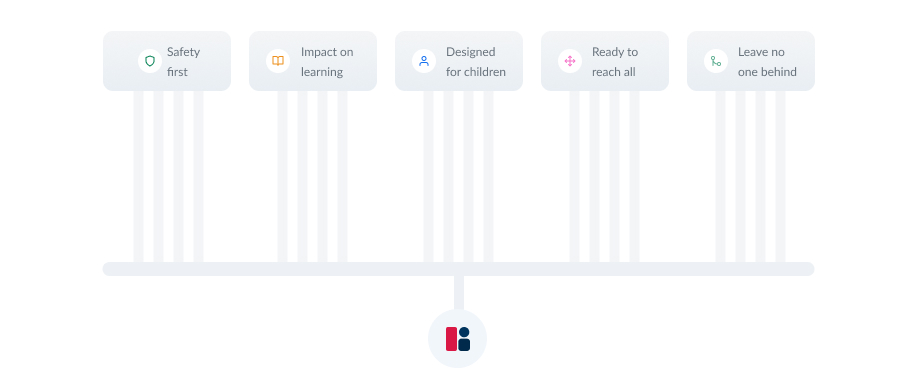
      Diagram explaining the EdTech for Good Framework

      Expert Review of Wumbox

      Evaluated using the Learning Cabinet’s rigorous EdTech for Good Framework to ensure safety, learning impact, scalability, and inclusion for all learners.

      EdTech for Good Framework

      Certifications and awards

      Compare Tools

      Wumbox logo

      Wumbox

      ReadingWritingSTEMMathematics

      Wumbox is a learning platform that uses artificial intelligence and fun interactive video games to develop the cognitive skills of kids between 3 and 12 years of age in a safe, personalized, autonomous environment.

      Enuma School logo

      Enuma School

      MathematicsReadingWritingLanguages21st century skills

      Enuma School is a personalized updated, inclusive, and tablet-based learning application designed to help children develop foundational literacy and numeracy skills at their own pace. TEST update.

      Eduten logo

      Eduten

      Mathematics

      #1 Mathematics Learning Platform. From Finland.

      Escribo logo

      Escribo

      ReadingWriting21st century skills

      Evidence-based learning games to assess and foster early learning from preschool to 2nd grade.

      1